Basement Waterproofing NJ and the Role of Gutters Grading and Drainage
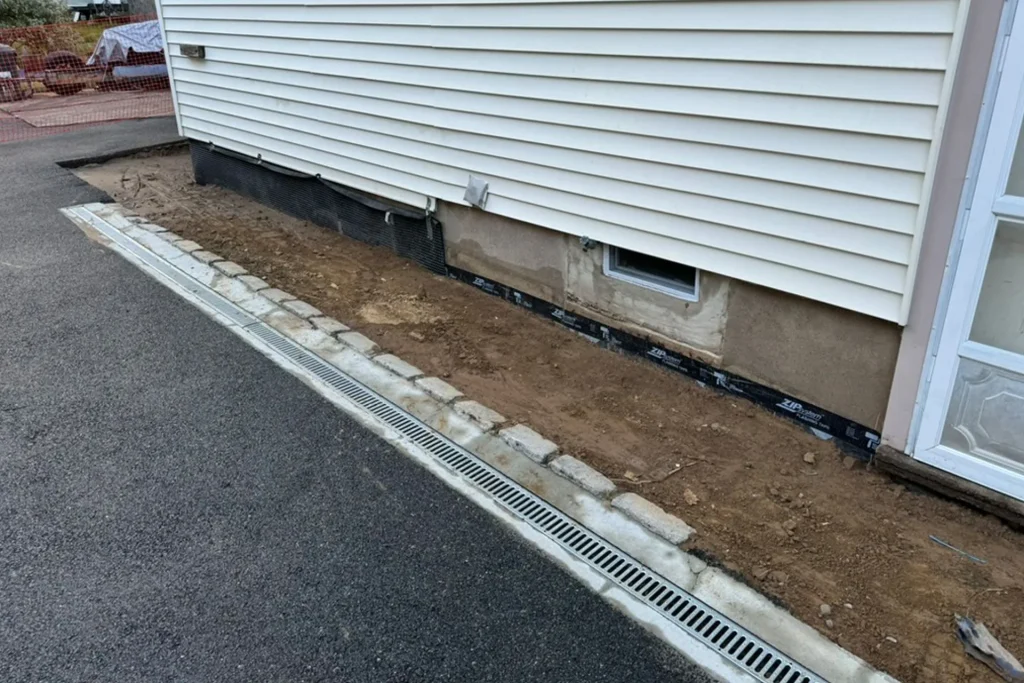

Basement water problems in New Jersey rarely begin in the basement.
That point gets missed all the time. A homeowner notices a damp wall, a musty smell, or a puddle near the water heater, and the first instinct is to think something failed below grade. Sometimes that is true. A cracked wall, a failed sump pump, or an aging drain system can absolutely be the immediate cause. But in a large share of homes, especially older homes across North Jersey, Central Jersey, and the Shore areas, the real problem starts with how water moves across the roof, down the exterior, and through the soil around the foundation.
That is why any serious conversation about Basement Waterproofing NJ has to include gutters, grading, and drainage. These are not side issues. They are often the difference between a basement that stays dry during a hard coastal storm and one that takes on water three times a year.
New Jersey homes deal with a challenging mix of conditions. Heavy spring rains, summer cloudbursts, fall leaf buildup, freeze and thaw cycles, and in some counties a naturally high water table all put pressure on foundations. Add in compact suburban lots, old clay soils, and additions built over the decades, and water management becomes less about a single fix and more about directing water intelligently before it can build up against the house.
Why the outside controls what happens inside
Water follows the path of least resistance, but it also follows the path you accidentally create for it.
If a gutter overflows at one corner, thousands of gallons over a season can dump into the same small patch of soil. If that soil slopes toward the house instead of away from it, the water settles against the foundation. If the downspout ends two feet from the wall, or worse, drains into a buried line that has collapsed, the soil around the footing stays saturated. Once that happens, basement walls and floors are no longer dealing with occasional moisture. They are resisting hydrostatic pressure, which is simply water pressure in the soil pushing inward.
That pressure does not care whether the basement is finished, painted, or recently remodeled. It finds tiny cracks, cold joints where the floor meets the wall, porous masonry, pipe penetrations, and weak spots in old parging. On some homes it shows up as trickles during storms. On others, it appears as efflorescence, peeling paint, or a persistent damp odor that never quite leaves.
Homeowners often ask why the basement leaks only during very heavy rain if the wall crack is there all year. The answer usually comes back to volume and saturation. A dry period can hide a lot. Then one hard rain, combined with poor roof runoff control, overwhelms the soil around the foundation and exposes every weakness at once.
Gutters are not cosmetic trim
People tend to think of gutters as maintenance items, the sort of thing you clean when leaves build up. In practical terms, they are the first drainage system your house depends on.
A modest roof sheds an astonishing amount of water. A 1,500 square foot roof can produce hundreds of gallons from a single inch of rain. During a strong New Jersey storm, that water comes off fast. Without functioning gutters and downspouts, it does not disperse gently into the yard. It lands in concentrated sheets right next to the foundation.
That is where basement trouble begins.
I have seen houses with well-built foundations and decent interior drainage still struggle because one valley of the roof emptied at a problem corner. Each storm was soaking the same section of backfill. Over time, the homeowner kept treating the symptom inside with paint and dehumidifiers, while the real source was visible from the driveway every time it rained.
Gutters need enough capacity for the roof area they serve, but capacity alone is not the whole story. Pitch matters. Hangers matter. The condition of seams matters. Debris matters. Even a small sag can create standing water, which leads to overflow and winter ice. In wooded parts of New Jersey, where maple seeds, oak leaves, and pine needles are constant, seasonal maintenance is not optional. It is part of keeping water out of the basement.
Downspouts deserve just as much attention. A perfectly clean gutter system does little good if the downspouts discharge too close to the house. Extensions should move water well away from the foundation, typically several feet at minimum, and farther if the lot layout allows. On tight suburban lots, that may require a carefully installed solid drain line to a safe discharge point. But buried lines only help when they are pitched correctly, not crushed, and not tied into something that backs up.
One common mistake is sending roof water into a footing drain or old perimeter system that is already marginal. That can overload the very system meant to protect the basement. Another is connecting downspouts to lines clogged with roots or silt. The homeowner assumes water is being carried away because they cannot see it, when in fact it is surfacing underground beside the footing.
Grading: the silent problem homeowners stop noticing
Grading problems are easy to miss because they develop slowly.
A house may have been built with decent slope away from the foundation, then over the years the landscape settles. Mulch gets piled against siding. Planting beds are built up like bowls. Patio edges trap runoff. Walkways tilt inward. A new air conditioning pad changes water flow just enough to redirect it toward the basement wall. None of these changes look dramatic on their own, but together they can turn the perimeter of the home into a collection area.
The basic principle of grading is simple: the ground immediately around the house should encourage surface water to move away from the structure. In reality, getting that right can be tricky. You have to consider lot lines, neighboring properties, hardscape elevations, basement window wells, garage entries, stoops, and where water can lawfully and practically discharge.
In New Jersey, many homes sit on relatively flat parcels where there is not much natural fall to work with. That limits how aggressively you can regrade without affecting lawns, fences, or adjoining yards. In those cases, minor regrading may need to work together with drainage swales, catch basins, or exterior drains. It is rarely one move that solves the issue. It is usually a coordinated set of corrections.
Settlement along the foundation is especially common. Backfilled soil around a newly built or newly excavated foundation compresses over time. Years later, a shallow trough can form right where you least want water to collect. During heavy rain, that trough behaves like a moat. When homeowners say, "Water just seems to sit there," that observation matters. Standing water near the house, even for a few hours after rain, is a sign worth taking seriously.
Drainage is where many waterproofing plans succeed or fail
The word drainage gets used loosely, but in basement waterproofing it means moving water predictably and safely before it builds pressure where you do not want it.
Sometimes the answer is surface drainage. Sometimes it is subsurface drainage. Sometimes it is both.
Surface drainage includes the visible systems: gutters, downspouts, swales, grading, splash blocks, channel drains at doors or garage thresholds, and catch basins in low spots. These handle the water you can see. Subsurface drainage deals with what happens after water infiltrates the soil. That may involve footing drains, exterior drain tile, interior perimeter drains, sump systems, and waterproof membranes.
A lot of frustration comes from applying a subsurface fix to a surface-water problem. If roof runoff dumps at the foundation, an interior drain may manage the symptom but leave the cause untouched. The basement may stay drier, but the wall remains exposed to unnecessary moisture and pressure. That can shorten the life of finishes, encourage mold conditions, and in some cases worsen freeze and thaw damage in masonry.
The reverse can also happen. A house may have well-maintained gutters and reasonable grading, but still take on water because groundwater rises during prolonged wet periods. Parts of New Jersey, especially near streams, wetlands, or coastal zones, can see seasonal high water that challenges older foundations. In those cases, exterior water management helps, but it may not be enough by https://louissjap376.inkharbory.com/posts/basement-waterproofing-nj-why-quick-action-matters-after-water-intrusion itself. A sump system or perimeter drainage may still be necessary.
Judgment matters here. Good waterproofing is not about selling the biggest system. It is about matching the fix to the water pathway.
What a careful inspection usually reveals
A proper basement waterproofing assessment starts outside and keeps circling back inside.
You look at the roofline first, not because every leak starts there, but because roof discharge is the cheapest major water source to control. Then you walk the downspouts, check for staining on siding, observe soil settlement, inspect hardscape pitch, and note any low areas that hold water. Window wells, bilco doors, porch slabs, and attached garage thresholds all deserve attention because they often act like funnels during storms.
Inside, the pattern of moisture tells a story. Water at a single corner after heavy rain suggests one set of causes. Dampness along the full wall line suggests another. Staining at the cove joint where wall meets floor often points toward pressure beneath the slab or at the footing. Efflorescence on masonry can indicate repeated moisture migration even if the wall is not actively leaking during the inspection.
I have seen basements where the homeowner was certain a finished wall concealed a major structural leak, only for the investigation to show that one disconnected downspout elbow was saturating the soil outside that exact room. I have also seen the opposite, where all exterior runoff had been corrected but water still rose through floor cracks because the groundwater conditions called for an interior system.
That is why quick assumptions are expensive.
The common trouble spots around New Jersey homes
Certain exterior conditions come up again and again in Basement Waterproofing NJ work. They are not the only ones, but they are frequent enough that homeowners should know what to look for.
- Downspouts discharging too close to the foundation, often hidden behind shrubs or mulch beds.
- Negative grade created over time by settlement, landscaping, or added hardscape.
- Clogged or undersized gutters that overflow during concentrated rainfall.
- Buried downspout lines that are crushed, clogged, or improperly pitched.
- Low entry points such as basement stairs, areaways, and window wells with weak drainage.
None of these are exotic failures. That is the point. Water intrusion often comes from ordinary details that were ignored for years.
Older homes versus newer homes
Older homes in New Jersey often have stone, brick, or block foundations that behave differently from newer poured concrete walls. They can be more porous, more irregular, and more sensitive to repeated moisture exposure. Many also predate modern waterproofing standards. Exterior coatings may be minimal or long deteriorated. Drainage systems, if they exist, may be incomplete or clogged after decades.
These homes usually benefit from conservative, thoughtful solutions. You do not always want to trap moisture in old masonry with the wrong interior coating. You want to reduce water load outside first, then decide whether masonry repointing, crack repair, exterior waterproofing, or interior drainage is the right complement.
Newer homes are not immune. In fact, some newer developments experience drainage problems because the surrounding lot grading changed after construction, or because the initial landscaping did not hold its shape. Fast-paced construction can also leave compacted soils and awkward runoff patterns that do not show themselves until the second or third storm season.
The age of the home matters, but the water path matters more.
When gutters and grading are enough, and when they are not
There are cases where exterior corrections solve the problem almost completely. If the basement only leaks during direct gutter overflow, and the foundation itself is otherwise sound, improving the roof drainage and grading can make a dramatic difference. Homeowners are often surprised by how much better the basement feels after redirecting downspouts and reshaping problem areas around the house.
But there are also cases where those improvements, while necessary, do not finish the job. If water is rising through the slab, if the water table is consistently high, or if the foundation has multiple entry points below grade, then interior or exterior waterproofing systems become part of the solution.
A practical way to think about it is this: gutters and grading reduce how much water reaches the foundation, drainage systems manage the water that still does.
That distinction keeps expectations realistic. It also helps homeowners spend money in the right order. There is little value in installing an elaborate interior system while leaving overflowing gutters to dump water at the same corner every storm. It is equally unwise to spend only on regrading when the basement clearly needs a sump and perimeter drain due to persistent groundwater.
The cost of getting the sequence wrong
Waterproofing work becomes expensive when the diagnosis is shallow.
I have seen homeowners pay for repeated crack injections without any meaningful improvement because the soil outside remained saturated from bad discharge. I have seen people re-landscape entire yards when the real issue was a failed underground downspout line. On the other side, I have seen full interior systems installed in basements where the main culprit was a pair of clogged gutters and a compacted flower bed that pitched inward.
The sequence should usually be: identify water sources, reduce the water load at the surface, evaluate the remaining risk, then choose the least invasive system that reliably handles what is left.
That approach is not glamorous, but it works.
A practical inspection after the next hard rain
The best time to understand your drainage is during or immediately after a significant storm. Dry-weather inspections matter, but rain reveals behavior, and behavior tells the truth.
If you walk the exterior after a storm, pay attention to the following:
- Look for overflowing gutters, drips at seams, and downspouts that discharge right back toward the wall.
- Notice where puddles linger near the house more than a few hours after rain stops.
- Check whether mulch beds or walkway edges trap water against the foundation.
- Watch basement window wells and stairwells for pooling or slow drainage.
- Inside the basement, look for fresh damp spots, staining lines, or musty areas that correspond to exterior trouble spots.
This kind of observation often explains more than a sales pitch ever will.
Basement finishing changes the stakes
A partly damp storage basement is one thing. A finished basement is another.
Once drywall, flooring, trim, insulation, and furniture are added, small moisture problems become expensive. Even minor repeated seepage can ruin flooring, swell trim, foster mold growth behind walls, and create indoor air quality issues. Mechanical equipment is also at risk. Furnaces, water heaters, electrical panels, and laundry areas are often located in the basement, and they do not respond well to chronic moisture.
That is one reason professional Basement Waterproofing NJ work should not be reduced to "stopping leaks." The broader goal is creating a stable below-grade environment that can stay dry across seasons, not just after one repair visit.
Drainage details that deserve more respect
Some of the most important fixes are not dramatic. They are precise.
A downspout extension that carries water another ten feet can change the moisture profile around a corner of the house. A shallow swale can redirect runoff from a neighbor's yard before it reaches your foundation. A window well cover, properly fitted and not used as a substitute for drainage, can reduce direct water entry at a vulnerable opening. Replacing compacted, inward-sloping bed soil with properly pitched grade can stop chronic pooling.
Even the choice between perforated and solid pipe matters in the right location. Solid pipe is generally used to transport roof runoff away without releasing it near the foundation. Perforated pipe is used where the goal is to collect subsurface water. Mixing up those functions can create new problems while trying to solve old ones.
This is where experience shows. Waterproofing is full of details that look interchangeable from a distance and are not interchangeable at all.
New Jersey weather makes maintenance part of the waterproofing plan
Any exterior water management system is only as good as its upkeep.
Leaves clog gutters. Ice bends hangers. Mowers dislodge extensions. Root intrusion blocks buried lines. Settlement changes pitch. Mulch creeps higher. Splash blocks shift. What worked five years ago may not be working now, even if nothing appears broken from the street.
New Jersey's seasonal pattern is hard on drainage systems. Late fall leaf drop fills gutters fast. Winter freeze and thaw opens joints and shifts soil. Spring rains test every weak point. Summer storms dump intense short-duration rainfall that overwhelms undersized or neglected systems. Homeowners do not need to become drainage experts, but they do need to treat exterior water control as routine maintenance, not a one-time project.
A dry basement is often the result of many small things going right at the same time.
Choosing the right scope of work
The best waterproofing plans are not built around fear. They are built around evidence.
If the problem is mostly roof runoff and bad grade, say so and fix that first. If the home has chronic groundwater pressure, say that too and design for it. If the basement has multiple contributing factors, prioritize them honestly. A good contractor should be able to explain why each part of the recommendation exists and what problem it solves.
For homeowners, the key is to resist the temptation to search for a single miracle product. Paint is not drainage. Caulk is not grading. A sump pump is not a substitute for proper roof discharge. Each tool has a role, and the role only makes sense when the water path has been understood.
That is the central lesson behind successful Basement Waterproofing NJ projects. Water has to be managed before it can be resisted. Gutters control the first surge, grading shapes the route, and drainage relieves the pressure that remains. When those pieces work together, basements stay drier, foundations stay healthier, and repairs last longer.
ARD Waterproofing
Address: 98 Smull Ave, West Caldwell, NJ 07006
Phone number: +12016465936
FAQ About Basement Waterproofing NJ
What is the best waterproofing method for a basement?
The best overall approach to waterproofing a basement is a combined exterior and interior system that stops water at the foundation wall and safely manages any moisture that gets through.
What is the average cost to waterproof a basement?
The average cost to waterproof a basement ranges from $2,500 to $15,000, with most homeowners paying around $5,200 for a complete project.
Can a basement be waterproofed from the inside?
Yes, a basement can be waterproofed from the inside, and it is often the most affordable and least disruptive method.